
Buying Group Marketing: How to Reach the Whole Committee, Not One Lead
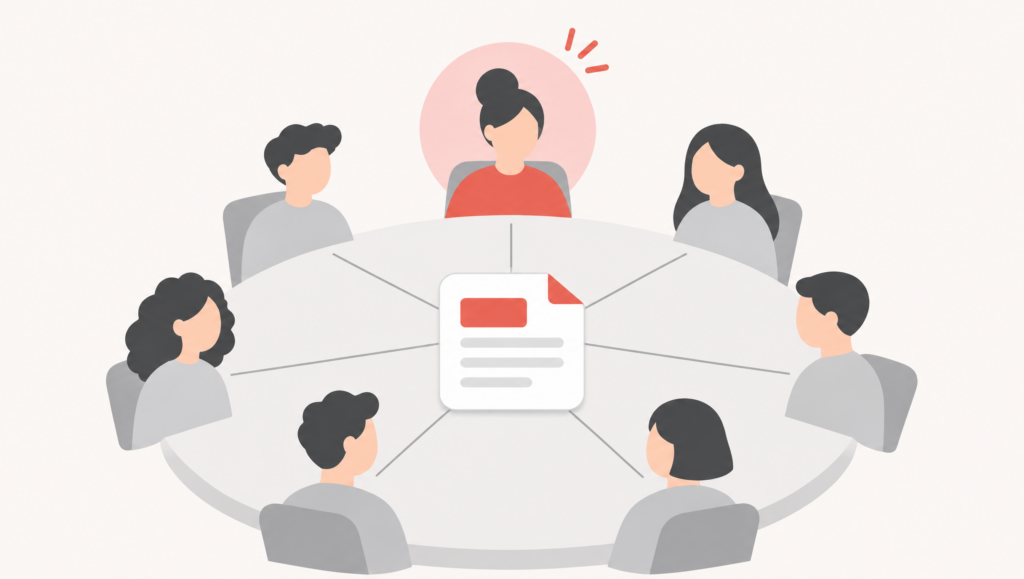
Buying group marketing means planning campaigns, content and handoffs around the whole group of people behind a B2B purchase, not around the one person who filled in a form. That one contact is rarely the decision-maker. Behind them sit finance, IT, security, procurement, end users and often outside advisers, and each of them can stop the deal.
This guide explains what a buying group is and why single leads mislead, who sits in a typical group today and how to spot members in your data. It also covers what content each role needs, when a group is ready for sales and how to measure engagement. It ends with a buying group role map you can copy.
What is a buying group, and why do single leads mislead?
Short answer: A buying group is the set of people inside and around a company who take part in one purchase decision. Single leads mislead because they show interest from one person while hiding everyone else who must agree. A hot lead can sit in a cold account, and a quiet account can hold a deal about to happen.
Most marketing systems were built to track individuals: a form fill, a contact record, a lead score. Forrester’s Buying Groups Manifesto argues that many teams ignore signals from additional group members who appear after the first lead. Our guide to defining MQLs and SQLs still matters, but buying group marketing adds the account and the opportunity as the real unit of progress.
Who sits in a typical B2B buying group today?
Short answer: Buying groups are large and getting larger. Forrester’s 2026 research found that, on average, 13 internal stakeholders and nine external participants influence a decision. For purchases with generative AI features, the group doubles in size, and procurement now acts as a decision-maker in more than half of cycles.
Forrester’s State of Business Buying, 2026 is based on a survey of nearly 18,000 business buyers. It found that groups for purchases with genAI features have 14 members on average, compared with seven for purchases without them. It also found that procurement professionals serve as decision-makers 53% of the time.
The roles usually include a champion who feels the problem, a budget owner, technical evaluators, security and legal reviewers, procurement and the end users who will live with the product. External participants can include consultants, partners and peers at other companies.
How do you spot buying group members in your data?
Short answer: Group your contacts and activity by account, then look for several people from the same company engaging within a short period. Match job titles to roles, connect anonymous website visits to accounts where your tools allow it and ask sales to add every person they meet to the opportunity record.
- Associate every contact in your CRM with an account, and clean duplicate company records.
- Map job titles to buying roles: champion, budget owner, technical, security, procurement, user.
- Track engagement by account over 30 to 90 days, not by person alone.
- Add contact roles to every open opportunity, and make it part of the sales process.
- Flag accounts where three or more roles show activity in the same period.
Data quality decides how far you get. If contacts are not linked to accounts, buying group marketing is impossible to measure, so fix that first.
Which content does each buying group role need?
Short answer: Each role asks a different question. Champions need help explaining the problem, budget owners need cost and return, technical evaluators need integration details, security reviewers need evidence of controls and procurement needs terms. Content for only one of these roles leaves the others without answers.
| Role | Main question | Content that answers it |
|---|---|---|
| Champion | How do I make the case internally? | Problem guides, business case templates, short explainer videos |
| Budget owner | What will it cost and return? | Pricing logic, ROI scenarios, case studies with numbers |
| Technical evaluator | Will it work with our stack? | Integration docs, architecture pages, trial access |
| Security and legal | Is it safe and compliant? | Trust page, certifications, data processing terms |
| Procurement | Are the terms acceptable? | Clear contract terms, pricing structure, vendor details |
| End user | Will this make my work easier? | Product tours, user reviews, onboarding guides |
For hard-to-reach roles, expert voices help. LinkedIn’s research reports that 95% of hidden decision-makers say strong thought leadership makes them more open to outreach, as covered by Social Media Today. Our guide to promoting your experts’ posts shows how to put paid reach behind them.
When is a buying group ready for sales?
Short answer: A buying group is ready when several key roles from the same account are engaging and at least one shows clear buying intent, such as a pricing visit or a demo request. Agree on the exact rule with sales, write it down and review it every quarter against closed deals.
A simple starting rule is: at least three roles active in 30 days, including one budget or technical role, plus one high-intent action. Paid channels can then target the missing roles. Our guides to LinkedIn targeting for B2B and account-based programmatic show how to reach specific roles inside named accounts.
How do you measure buying group marketing?
Short answer: Measure at the account and opportunity level. Track how many roles are engaged per target account, how many opportunities have three or more contact roles and how win rates compare between well-covered and poorly covered deals. Lead volume alone says little about buying group progress.
- Role coverage: share of target accounts with three or more engaged roles.
- Opportunity coverage: average number of contact roles per open opportunity.
- Win rate by coverage: win rate for opportunities with high versus low role coverage.
- Cycle time: days from first engagement to close, by coverage level.
Add these to your marketing performance dashboard so they sit next to spend and pipeline.
What are the limits of buying group marketing?
Short answer: You will never see every member of a buying group. Some influence the decision without visiting your site, and privacy rules limit what you can track. Buying group marketing improves your view, but it is still a partial picture, so pair data with what sales learns in conversations.
Larger groups also bring friction. Gartner’s 2026 Tech Buying Behavior Study describes a persistent buying divide driven by unhealthy conflict within buying teams. Content that helps the group agree is as valuable as content that sells.
Buying group marketing role map
Short answer: Fill in one role map per target account or segment. List each role, the person if known, their main question, the content you will send and how you will reach them. Empty rows show exactly where the group is uncovered and where to focus next.
| Role | Name and title (if known) | Main question | Content to send | Channel | Engaged? (Yes / No) |
|---|---|---|---|---|---|
| Champion | |||||
| Budget owner | |||||
| Technical evaluator | |||||
| Security and legal | |||||
| Procurement | |||||
| End user | |||||
| External adviser |
Frequently asked questions about buying group marketing
Is buying group marketing the same as account-based marketing?
They overlap but are not the same. Account-based marketing focuses on selected target accounts. Buying group marketing focuses on the people inside an account who take part in a specific purchase. You can apply buying group thinking to any account, including inbound ones you did not target in advance.
Do we still need MQLs with buying group marketing?
Yes, as one signal among others. An MQL shows that a person is interested. Buying group marketing adds the question of whether enough of the right roles in that account are engaged. Many teams keep lead scoring and add an account or buying group threshold for the handoff to sales.
How many people are in a B2B buying group?
It depends on the purchase. Forrester’s 2026 research found 13 internal stakeholders and nine external participants on average, and twice as many members when the purchase includes generative AI features. Small, low-risk purchases involve far fewer people, so size your approach to the deal.
What tools do we need for buying group marketing?
Start with a CRM where contacts are linked to accounts and opportunities have contact roles. Many marketing automation and ABM platforms now offer account or buying group views. Tools help, but clean data and an agreed handoff rule with sales matter more than any single feature.
Next step
Pick your five largest open opportunities this week and fill in a role map for each with your sales team. The empty rows will show which content and channels to fund next.
Want more practical guides on buying group marketing and B2B growth? Browse the latest articles on the Blippu blog.