
B2B Influencer Marketing: How to Build a Program, Not a One-Off Campaign
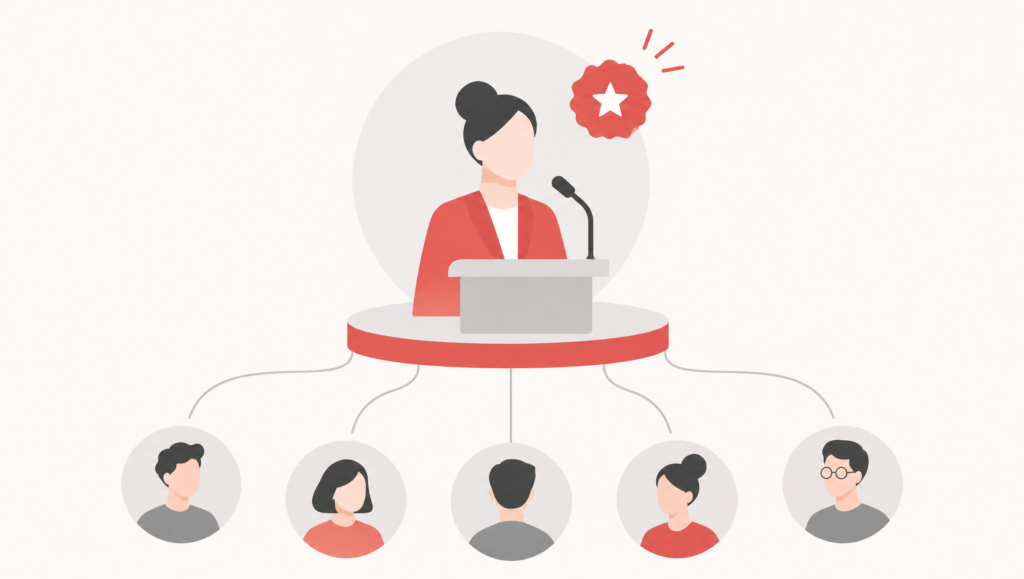
B2B influencer marketing means working with people your buyers already trust, such as practitioners, analysts, consultants and respected peers, so they share honest views about a problem you solve. It is not about celebrities or follower counts. In B2B, a respected expert with a small, focused audience can move more pipeline than a famous name.
This guide explains who counts as a B2B influencer, how to find experts your buyers trust and what a fair partnership includes. It also covers which formats work, how expert mentions help AI visibility and how to measure pipeline instead of reach. It ends with an influencer program scorecard.
What is B2B influencer marketing, and who counts as an influencer?
Short answer: B2B influencer marketing is a partnership with credible experts who create or share content for your buyers. Influencers include practitioners who post about their work, independent consultants, analysts, newsletter and podcast hosts, customers and even your own employees. Expertise and audience fit matter far more than audience size.
Adoption is now mainstream. TopRank Marketing’s 2025 B2B influencer marketing research found that 85% of B2B marketers incorporate influencers into their strategy, up from 34% in 2020, and 53% said their dedicated influencer budget is growing. Yet separate research by Resonance and Agentcy, reported by Communicate Magazine, found that only 10% have established programmes with defined budgets and processes.
That gap is the opportunity. Most teams have tried a campaign; few run a program.
How do you find experts your buyers already trust?
Short answer: Start from your buyers, not from influencer databases. Ask customers whom they follow, check who speaks at their events, who writes the newsletters they read and whose posts they share. Then check each expert’s real engagement with your target roles and companies.
- Ask ten customers which people they learn from in their field.
- List speakers from the conferences and webinars your buyers attend.
- Find the newsletters, podcasts and communities your buyers mention.
- Review each expert’s recent posts: who comments, and from which companies?
- Check that their views fit your positioning, without needing to agree on everything.
Your own team counts too. Employees with real expertise are often the most credible voices, and they are easier to work with over time.
What should a fair B2B influencer partnership include?
Short answer: A fair partnership has a written agreement covering scope, payment, timelines, review rights and disclosure. The expert keeps their own voice and opinions, and every paid or material relationship is disclosed clearly where the content appears. Scripted praise damages both the expert and your brand.
- Scope: what the expert will create, where and how often.
- Payment: fee, product access or other benefits, stated in writing.
- Review: a factual accuracy check, not control over opinions.
- Disclosure: how the relationship will be shown in each post.
- Usage rights: whether you can reuse the content in ads or on your site.
In the United States, the FTC’s guidance for influencers says a disclosure should be placed with the endorsement itself and be hard to miss. Rules vary by country, so check local requirements with your legal team.
Which B2B influencer marketing formats work best?
Short answer: Formats that show expertise in depth work best: co-hosted webinars, podcast episodes, joint research, guest posts, LinkedIn posts and short video commentary. Choose the format that fits the expert’s strength and your buyers’ habits, and reuse each piece across several channels.
| Format | Best for | Watch out for |
|---|---|---|
| LinkedIn posts | Reach among professionals, quick reactions | Short life span without promotion |
| Co-hosted webinar | Depth, live questions, lead capture | Needs promotion from both sides |
| Podcast episode | Long-form trust with a focused audience | Harder to measure directly |
| Joint research report | Original data that others cite | Takes months and needs sound methods |
| Guest article | Search and AI visibility over time | Must be useful, not promotional |
Promoted expert posts can extend reach to your exact audience. Our guide to LinkedIn targeting for B2B covers how to put paid support behind the best content, and our guide to sponsoring experts’ posts on LinkedIn explains the format built for it.
How does B2B influencer marketing help AI visibility?
Short answer: When respected experts discuss your company on their own sites, newsletters, podcasts and posts, they create third-party mentions that AI tools can find. Buyers increasingly ask AI chatbots for shortlists, and those answers draw on many outside sources, not only your website.
G2’s 2026 AI search report found that AI chatbots are the top source influencing which vendors make buyer shortlists, cited by 54% of software buyers, ahead of review sites at 43%. Our guides to brand authority in AI search and off-page AEO explain how outside mentions shape AI answers.
Be careful with claims here. No AI vendor publishes how much any single mention counts, so treat this as a likely benefit, not a guaranteed one.
How do you measure pipeline from B2B influencer marketing?
Short answer: Track each expert’s content with unique links or codes, record self-reported sources on forms and check which target accounts engaged. Then follow those contacts to opportunities and revenue. Reach and likes show activity, but pipeline shows whether the program works.
- Tracked links: a unique URL or UTM per expert and format.
- Self-reported source: a “How did you hear about us?” field that lists expert content.
- Account engagement: which target accounts interacted with the content.
- Influenced pipeline: opportunities where a contact engaged with expert content.
- Brand signals: branded search and AI mentions over several months.
What can B2B influencer marketing not guarantee?
Short answer: It cannot guarantee leads, deals or AI citations, and results build slowly. An expert can change jobs, views or platforms, and paid relationships can reduce credibility if handled badly. Treat the program as a long-term trust investment and review it every quarter against pipeline.
Avoid shortcuts such as buying followers, paying for undisclosed praise or asking experts to repeat your talking points. They may lift short-term numbers, but they put your reputation and the expert’s at risk.
B2B influencer marketing scorecard
Short answer: Score each potential expert from 1 to 5 on five criteria before you approach them, and again after each campaign. Prioritize experts with high fit and trust over those with large but unfocused audiences. Keep the scorecard in one shared place so the whole team uses the same standard.
| Criterion | What to check | Score (1 to 5) |
|---|---|---|
| Audience fit | Share of their audience in your target roles and companies | |
| Expertise | Depth and accuracy of their recent content | |
| Trust | Quality of comments and how peers refer to them | |
| Cost | Fee and effort compared with expected reach in target accounts | |
| Results | Engagement, target account reach and influenced pipeline (after campaign) | |
| Total | Sum of the five scores |
Frequently asked questions about B2B influencer marketing
How is B2B influencer marketing different from B2C?
B2B influencers are usually practitioners and experts, not celebrities, and their audiences are smaller but more focused. B2B purchases involve buying groups and long cycles, so the goal is trust and consideration over months, not an impulse purchase. Content tends to be educational rather than lifestyle-based.
Should we pay B2B influencers?
Often, yes, because experts spend time and lend their reputation. Payment can be a fee, a research partnership or other benefits. Whatever the arrangement, put it in writing and make sure any material relationship is clearly disclosed where the content appears, as advertising rules require in many countries.
Can our own employees be B2B influencers?
Yes, and they are often the most credible option. Employees with real expertise can share what they learn in their work. Give them guidelines, time and support, but let them write in their own voice. Their posts can also be promoted through LinkedIn’s sponsored formats with their approval.
How long does B2B influencer marketing take to show results?
Expect engagement within weeks and pipeline signals within one or two quarters, depending on your sales cycle. Trust builds over repeated exposure, so one-off posts rarely show much. Plan for at least three months with the same experts before judging the program.
Next step
Ask ten customers this week which experts they follow, and score the top five with the scorecard. Start with one expert and one format before you scale the program.
Want more practical guides on B2B influencer marketing and brand authority? Browse the latest articles on the Blippu blog.