
How to Get Cited by Gemini
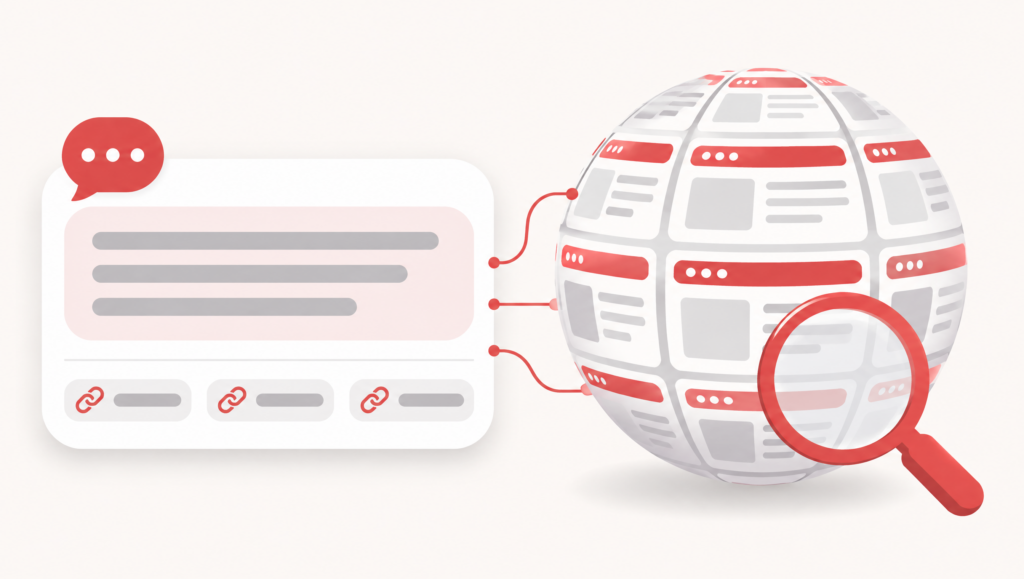
To get cited by Gemini, your pages need to be found through Google Search. They also need to be trusted enough to be chosen and clear enough to support a specific claim. Gemini is Google’s AI assistant, separate from AI Overviews and AI Mode, and it shows sources only for some answers. For B2B SaaS companies, it is now one of the assistants buyers use to research vendors.
This guide explains how Gemini decides when to search the web, which sources it cites most and how it differs from Google’s AI features in Search. It also covers what a B2B SaaS company should fix first and how to test and track progress. It ends with a readiness checklist and a monthly test log.
How does Gemini decide when to search the web?
Short answer: Gemini searches Google when the model decides that fresh or specific web information will improve its answer. It then generates one or more search queries, reads the results and writes a response. When it uses sources, the Gemini app shows a Sources button or inline links, but not every answer has them.
Google’s Gemini API documentation describes the flow. The model analyzes the prompt and decides whether Google Search can help. Then it runs one or more searches and builds a grounded answer. Google has not published the exact rules the consumer app uses. Its Gemini Apps help page says that sources may appear inline or below a response, and that some responses include none.
In practice, comparison and research prompts, recent facts and named products are more likely to trigger a search than general explanations. Gemini-based AI Mode also splits prompts into many sub-queries, as our guide to query fan-out explains.
Which sources does Gemini cite most?
Short answer: Community sites, reference sites and video lead. In Ahrefs’ November 2026 analysis of more than 3 million US queries, Reddit took 29.9% of the top sources’ citations, followed by Wikipedia and YouTube. Another study found news sites cited in more than half of sourced Gemini answers in 2026.
| Source type | What the data shows | What it means for B2B SaaS |
|---|---|---|
| 29.9% mention share, ranked first (Ahrefs, November 2026) | Real discussions about your category matter | |
| Wikipedia | 8.6% mention share, ranked second (Ahrefs) | Entity facts must be accurate where they exist |
| YouTube | 6.3% mention share, ranked third (Ahrefs) | Demo and explainer videos can be sources |
| News sites | Cited in 55 of 100 sourced answers, up from 41 in 2025 (Resoneo) | Digital PR and trade media coverage count |
These figures come from Ahrefs and Resoneo, which used different samples, so they do not add up. Both cover all topics, not only B2B software, where vendor sites and review platforms play a bigger role.
How is Gemini different from AI Overviews and AI Mode?
Short answer: AI Overviews and AI Mode are part of Google Search and depend on Googlebot and normal indexing. The Gemini app is a separate product. A robots.txt token called Google-Extended lets sites limit use of their content in Gemini Apps, including grounding, without affecting Google Search.
That control matters. Search Engine Journal reported on Google’s documentation for the token. Google-Extended manages whether sites help improve Gemini Apps and Vertex AI. Grounding with Google Search on Vertex AI does not use pages that disallow it. If your robots.txt blocks Google-Extended to opt out of model training, it may also reduce your chances to get cited by Gemini. Decide which matters more for your company, and review our guide to robots.txt for AI crawlers with that trade-off in mind.
For Google’s AI features inside Search, see our guide to Google AI Overviews optimization.
What should a B2B SaaS company fix first to get cited by Gemini?
Short answer: Start with access and indexing in Google, then consistency of your company facts, then presence on the sources Gemini trusts. A page Gemini cannot find through Google Search cannot be cited. A brand described differently across the web is harder for any AI system to trust.
- Confirm your key pages are indexed in Google and show a snippet.
- Check your robots.txt policy for Google-Extended and decide on purpose.
- Make product, pricing and integration facts identical on your site, LinkedIn and review profiles.
- Answer buyer questions clearly on your own pages, with question headings and short answers.
- Build presence where Gemini looks: honest participation in Reddit discussions, explainer videos and trade media coverage.
The off-site steps follow the same logic as our guide to off-page AEO. Never post fake reviews or undisclosed promotional comments; communities and platforms remove them, and they damage trust.
How do you track whether you get cited by Gemini?
Short answer: Run a fixed set of buyer prompts in Gemini every month. Record whether your brand is mentioned and which sources are cited, and track visits from gemini.google.com in GA4. Google does not offer Gemini citation data to site owners yet, so your own log is the main record.
Use the same prompts, in the same language and account type, each month. Results vary between runs, so test each prompt at least twice. Our guide on how to measure AI search visibility explains how to build the prompt list.
Gemini readiness checklist and monthly test log
Short answer: Use the checklist once to fix the basics, then fill in the test log every month. The log shows whether your brand appears, which sources Gemini uses instead and what changed after each fix. After three months, you will know which actions moved your visibility.
| Readiness check | Pass condition | Done? |
|---|---|---|
| Google indexing | Key pages indexed and showing snippets | |
| Google-Extended | Policy chosen on purpose and documented | |
| Entity facts | Same description, pricing model and integrations everywhere | |
| Answer pages | Pricing, security, integrations and comparisons covered | |
| Third-party presence | Reviews, videos and media mentions in place |
| Month | Prompt | Brand mentioned? | Our pages cited | Sources cited instead | Change made since last test |
|---|---|---|---|---|---|
Frequently asked questions about how to get cited by Gemini
Does ranking well on Google help you get cited by Gemini?
It helps, because Gemini grounds answers with Google Search. But ranking alone is not enough. Gemini also leans on community, reference and news sources, and it picks passages that answer a specific part of the question. Strong pages plus third-party mentions give you the best chance.
Does blocking Google-Extended remove us from Google Search?
No. Google says Google-Extended does not affect inclusion or ranking in Google Search. Its documentation does not list it as a control for AI Overviews or AI Mode. It governs use in Gemini Apps and Vertex AI, including grounding. Blocking it may reduce Gemini citations.
Why does Gemini show no sources for some answers?
Gemini does not search the web for every prompt. When it answers from its own knowledge, there may be no Sources button. Research and comparison prompts are more likely to trigger a search. If a key prompt never shows sources, track brand mentions in the answer text instead.
Can we see Gemini traffic in GA4?
Partly. Visits from links in Gemini often appear as referrals from gemini.google.com, but some arrive without a referrer and land in Direct. Create a segment for that source, check landing pages and compare it with your monthly test log to see which citations send visits.
Next step
Run the readiness checklist this week and record your first five prompts in the test log. For the other assistants your buyers use, see our guides to getting cited by Claude and getting cited by Perplexity.
Want more practical guides on how to get cited by Gemini and other AI assistants? Browse the latest articles on the Blippu blog.